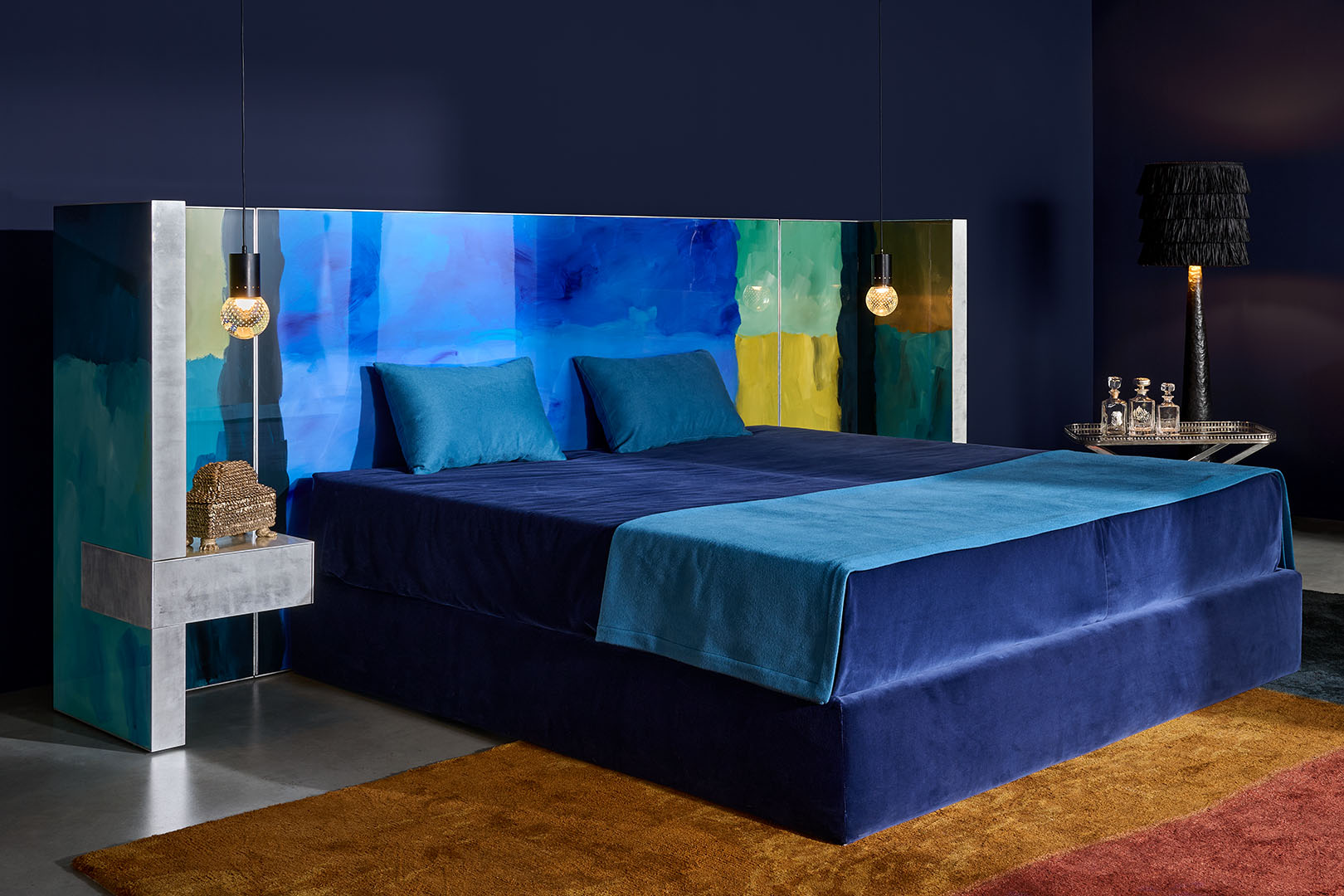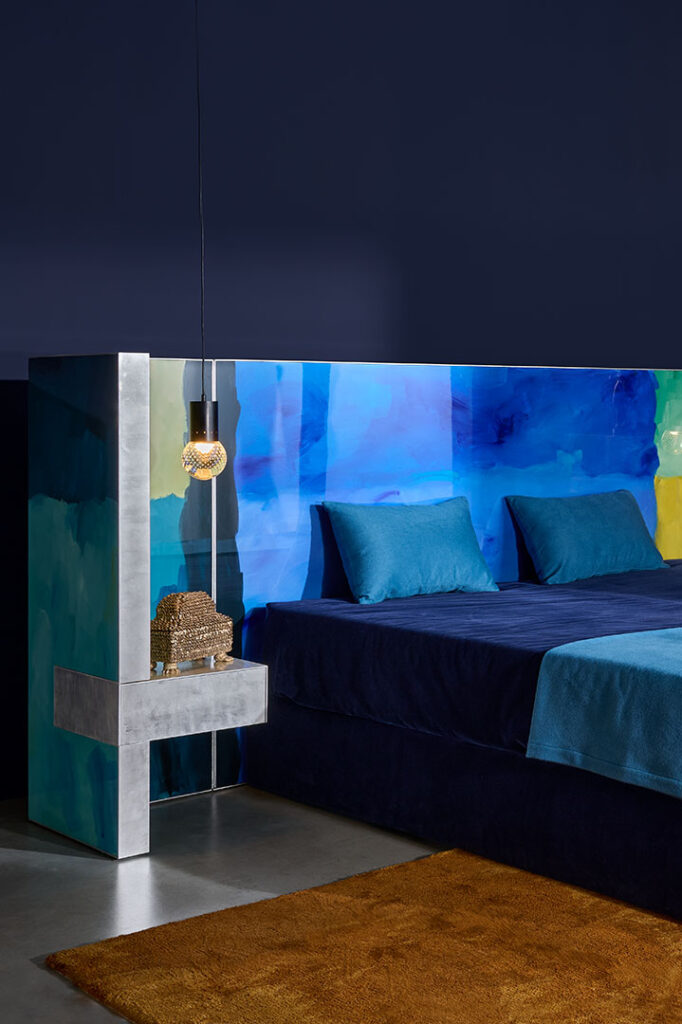

Within the Nilufar Grand Hotel, Filippo Carandini presents a signature bedroom not conceived as a calculated composition, but as the outcome of an instinctive process shaped by associations that gradually define the idea of night—as if night were not simply the opposite of day, but a landscape in itself.
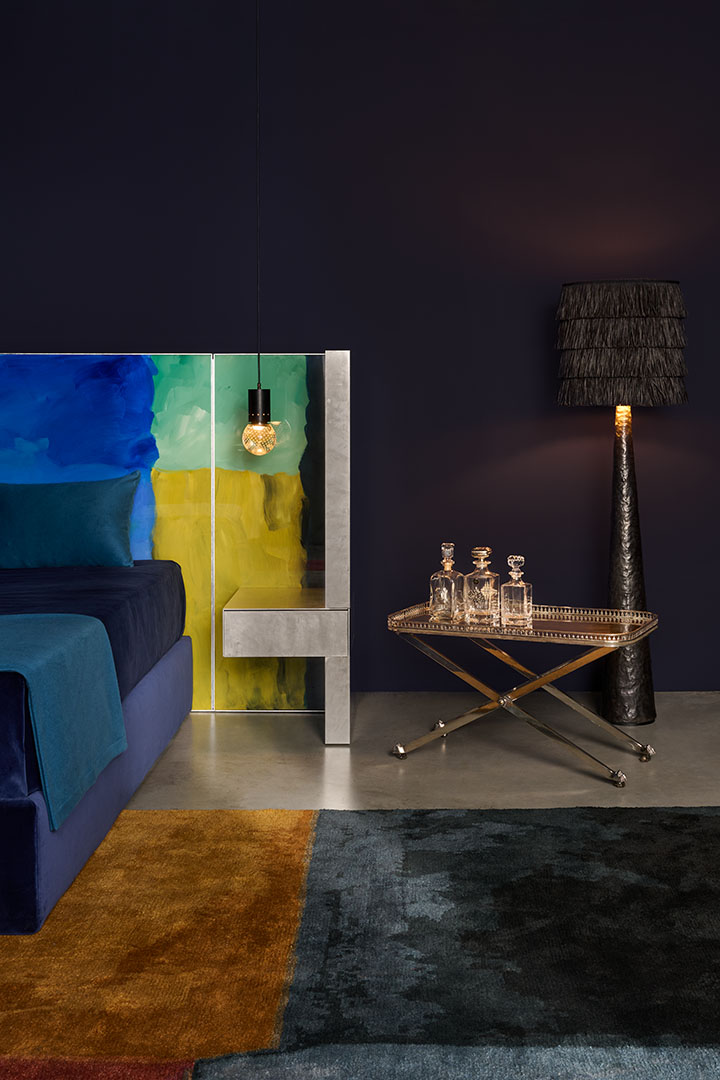
“The aesthetic of this room is very much a personal interpretation of a dreamlike chromatic rhythm,” he explains. “Half-tones drawn from blues and greens, with yellowish accents that fully emerge in the gold of the bronze and the mirror, or in the silver-leaf details, functioning as points of light—almost like stars.”
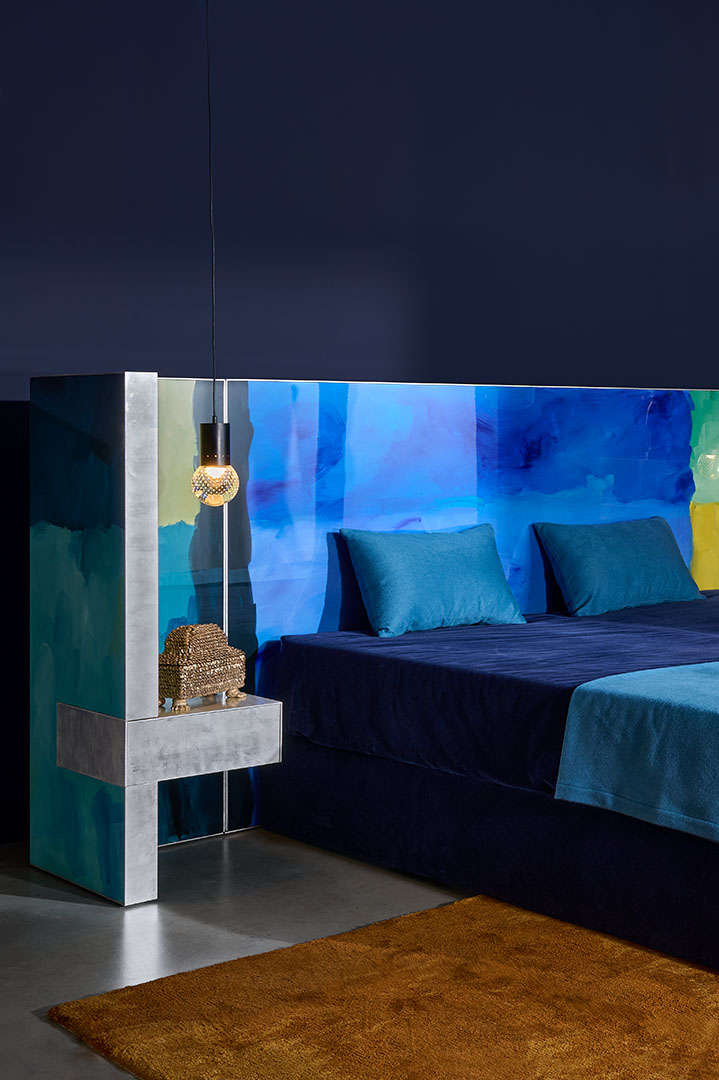
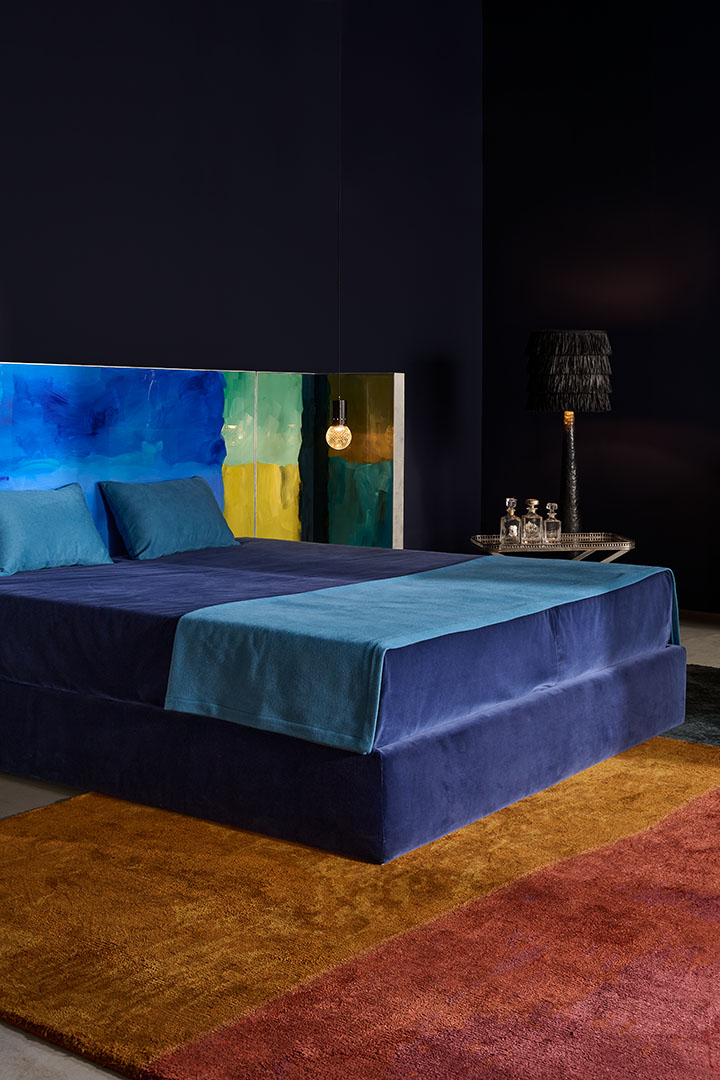
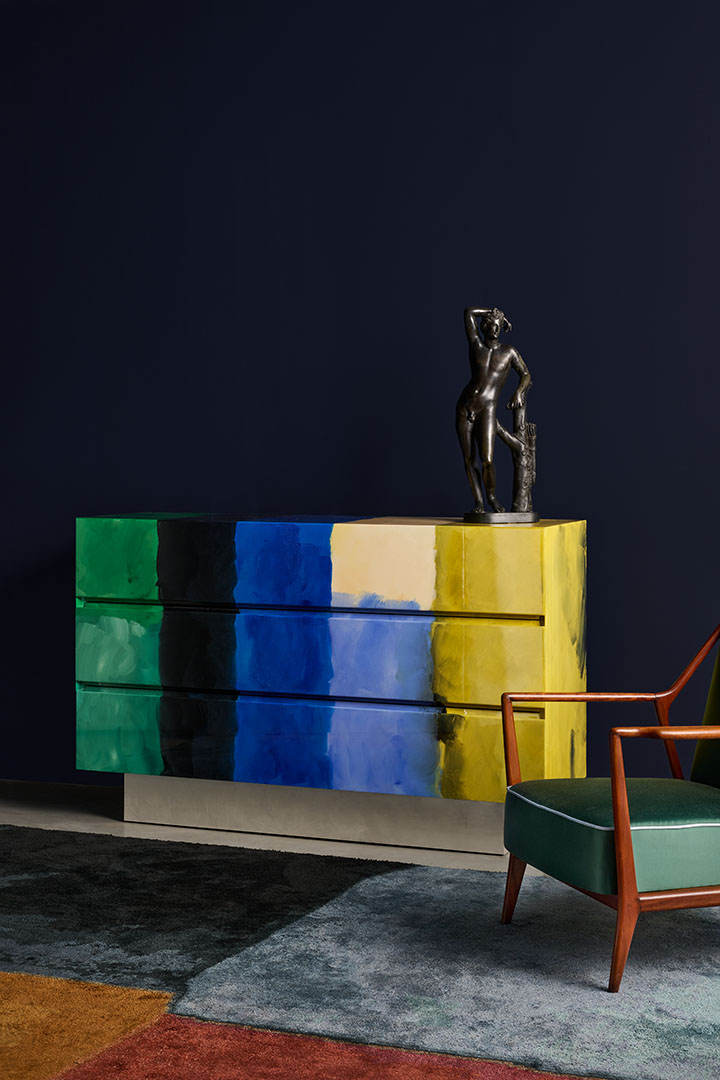
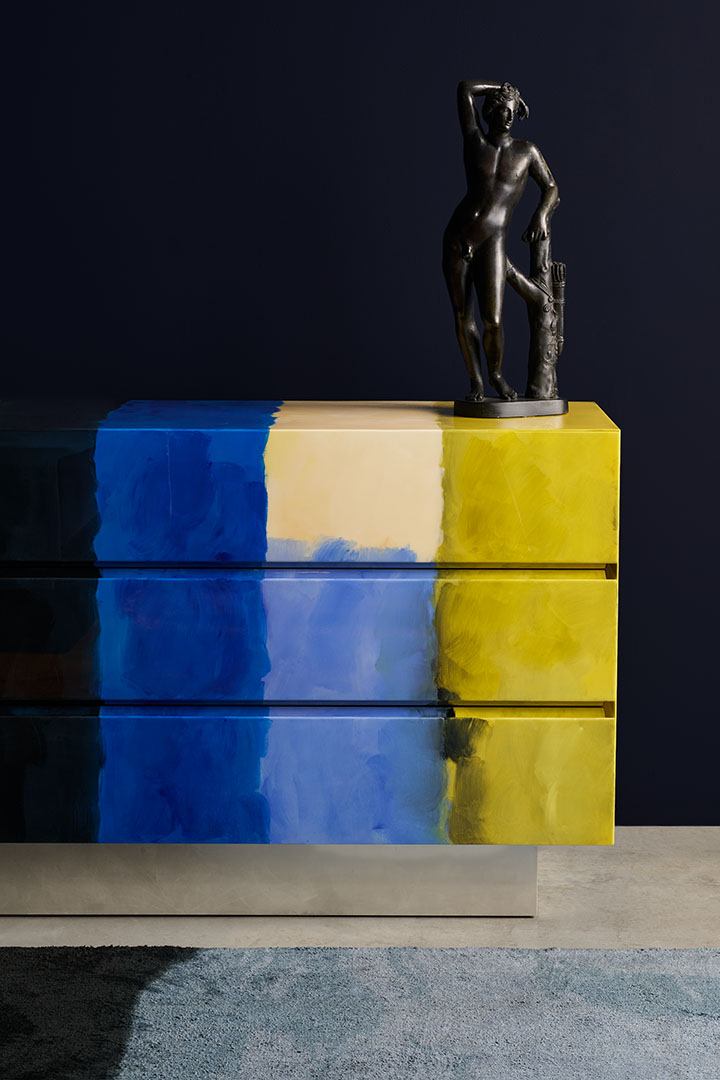
Guided by chromatic intuition, the Nephe bed and drawers, designed for Nilufar Edition, set the room’s visual and atmospheric register. Extending Carandini’s exploration of painting as structure, hand-painted volume becomes a ground for expression, their surfaces layered acrylics, unfolding in nocturnal blacks, violets, and muted tones that emerge and recede in stratified depth. Silver leaf traces subtle luminous interruptions along the profiles of the headboard, introducing a luminous threshold that interrupts the density of the painted surface. This subtle presence of metal catches and diffuses light, tracing a quiet boundary between shadow and reflection. Named after the ancient Greek word for “cloud,” they evoke a suspended atmospheric dimension, where surface, light, and color dissolve into a continuous presence.
From here, the room expands through intuitive associations rather than linear
composition. The carpet grounds the space in earthy, nocturnal tones, like a landscape seen from above at night. This reading only fully emerges when the project is seen as a whole: not as the result of a calculated plan, but as the outcome of an instinctive process, following associations that gradually shape the idea of night—as if night were not simply the opposite of day, but a landscape in itself.
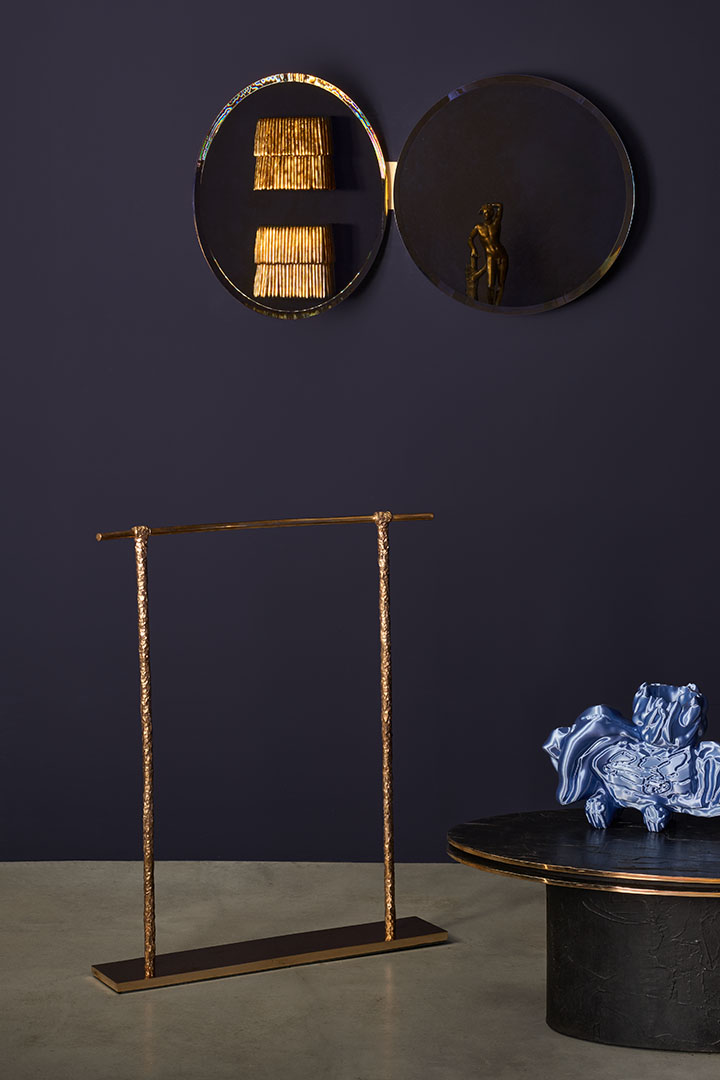
The silhouettes of the Cernos valet stand, crafted entirely in solid bronze from the collaboration with Fonderia Artistica Campagner, and the Linae double mirror take on almost animal-like qualities—forms that appear glimpsed rather than fully revealed, suspended between recognition and abstraction.
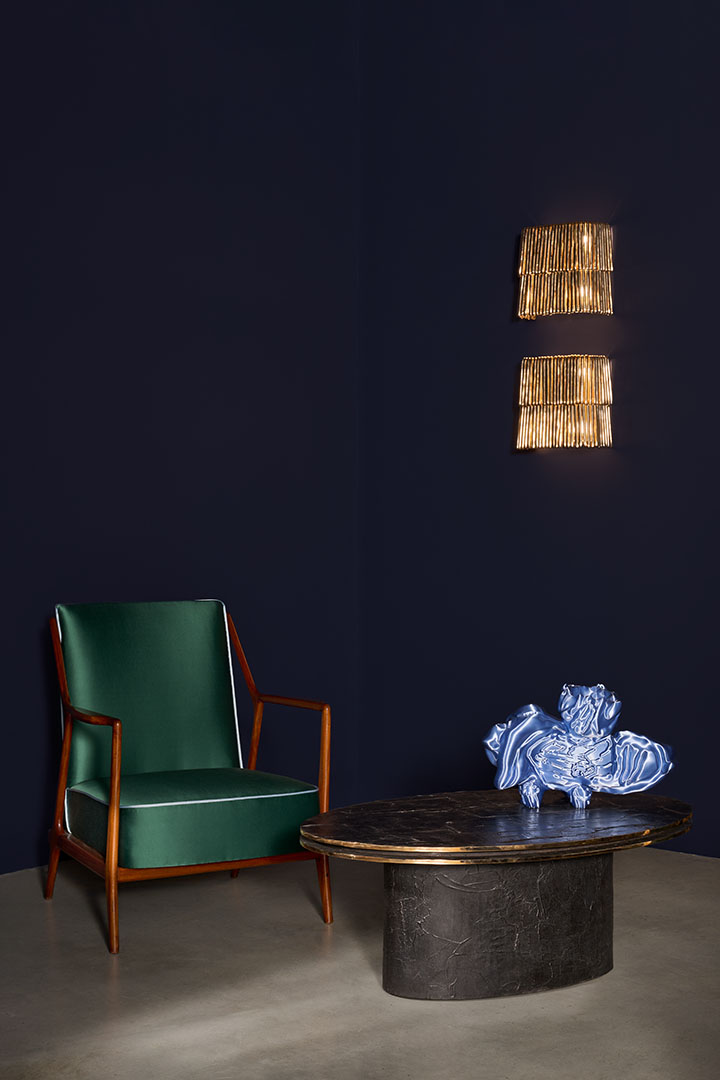
Part of a further material-driven line of enquiry, the Kalym coffee table, in sand-cast bronze with a deep black patina, extends Carandini’s ongoing exploration of form and matter, echoing the language of the earlier Kerià and Muse collection.
Completing the environment are the luxurious fabrics by Tabasso 1872, chosen as a refined material accent.